⚖️ A regulatory framework in transition since January 1st 2026
The year 2026 marks a decisive step in the evolution of safety and social protection standards on board pleasure and commercial vessels. Since January 1st 2026, several international amendments have come into force, directly impacting crew management and the technical compliance of yachts. These changes, driven by the International Maritime Organization (IMO) and the International Labour Organization (ILO), aim to strengthen human and operational safety.
Among the key measures, the entry into force of resolution MSC.560(108) now mandates training for the entire crew on the prevention of harassment and workplace violence. As highlighted by Gard AS, this update to the STCW (Standards of Training, Certification and Watchkeeping) standards makes behavioral competence a pillar of maritime safety, just as important as navigation or firefighting.
🛠️ Technical focus: SOLAS and lifting appliances
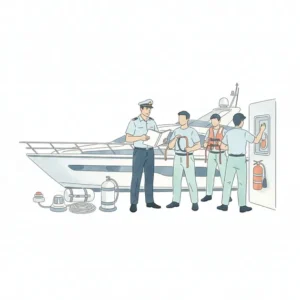
Beyond the human aspect, technical regulations are also tightening. The new amendment to the SOLAS (Regulation II-1/3-13) convention imposes strict standards for lifting appliances and anchor handling winches.
What changes for yacht owners
- Mandatory certification: All lifting equipment installed after January 1st 2026 must be certified by a classification society and undergo rigorous load testing.
- SWL marking: The Safe Working Load must be clearly indicated on each piece of equipment.
- Retroactivity: Existing equipment must comply with these new requirements during the first certificate renewal survey in 2026.
These measures aim to reduce the number of accidents related to the failure of tender cranes or anchoring systems, which are frequent incidents in the yachting sector.
🛡️ Implications for maritime insurance
Failure to comply with these new standards can have serious consequences for the validity of your insurance coverage. Insurers consider compliance with MLC 2006 and SOLAS conventions as a prerequisite for the vessel’s seaworthiness.
The importance of YachtSecure Insight™
At YachtSecure, we recommend that owners conduct a compliance audit of their lifting equipment and ensure that crew training certificates are up to date. A gap in these areas could lead to a loss of coverage in the event of a claim related to human error or material failure.
The constant evolution of MLC 2006, with new amendments planned for 2027 regarding repatriation and “key worker” status, requires constant monitoring to adapt your P&I insurance policies.
To stay compliant and protect your investment, contact our specialists at YachtSecure.com.